Discovery
User Feedback
Analytics Insights
Existing peer review process involved 8+ disconnected systems, averaging 14 days per case review with 30% requiring re-review due to incomplete documentation.
Business Goal
Create MedAxiom's flagship digital peer review platform that establishes industry standards while improving review speed, consistency, and quality across cardiovascular care.
Design Framework
We structured the app around four distinct user roles—Reviewer, Facility, CRM, and Admin—each with tailored workflows. The review process follows a standardized checklist system based on cardiovascular care protocols, with built-in audit trails to ensure accountability and reduce bias.
Key Design Decisions
Indigenous Review Interface
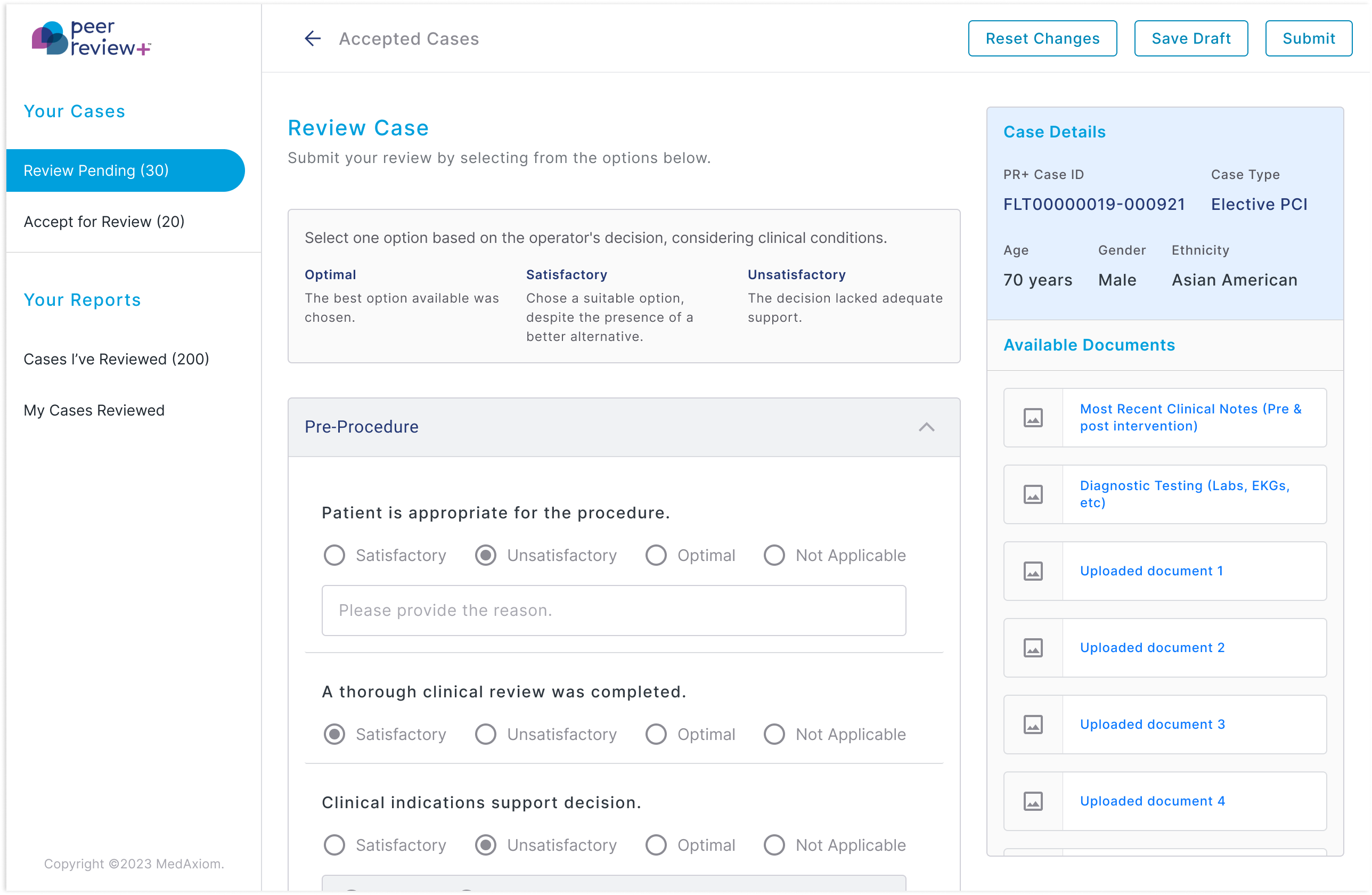
Created a groundbreaking review form that was indigenous to peer review workflows—using progressive disclosure with collapsible sections (Pre-Procedure, Clinical Review, Indications) and structured evaluation options (Optimal, Satisfactory, Unsatisfactory). This interface became the cornerstone of the platform's usability.
Bias-Free Evaluation System
Designed standardized checklists with predefined evaluation criteria and mandatory reasoning fields. This ensures consistent, objective reviews while maintaining clinical nuance through contextual notes and audit trails.
Unified Role-Based Dashboards
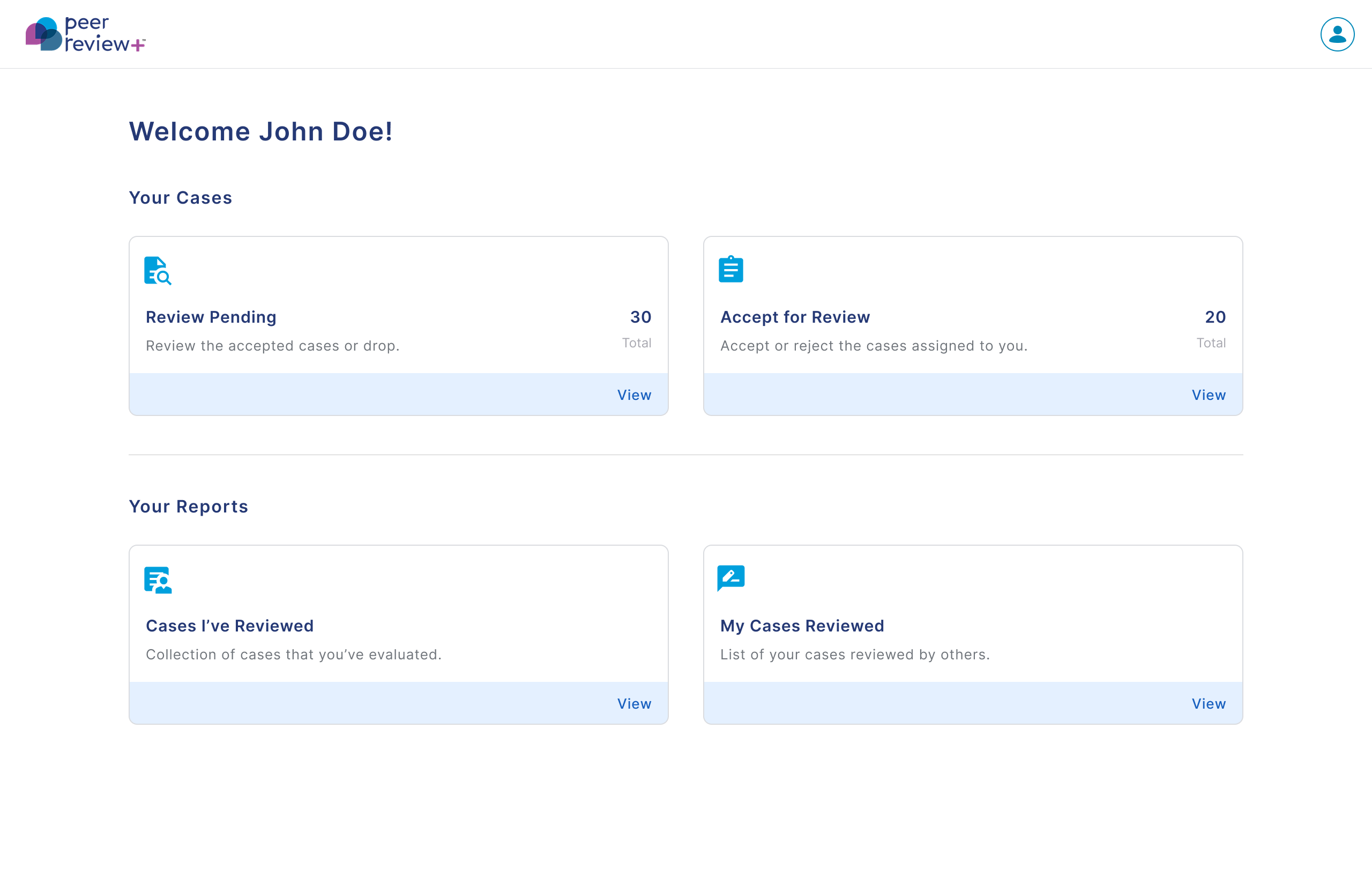
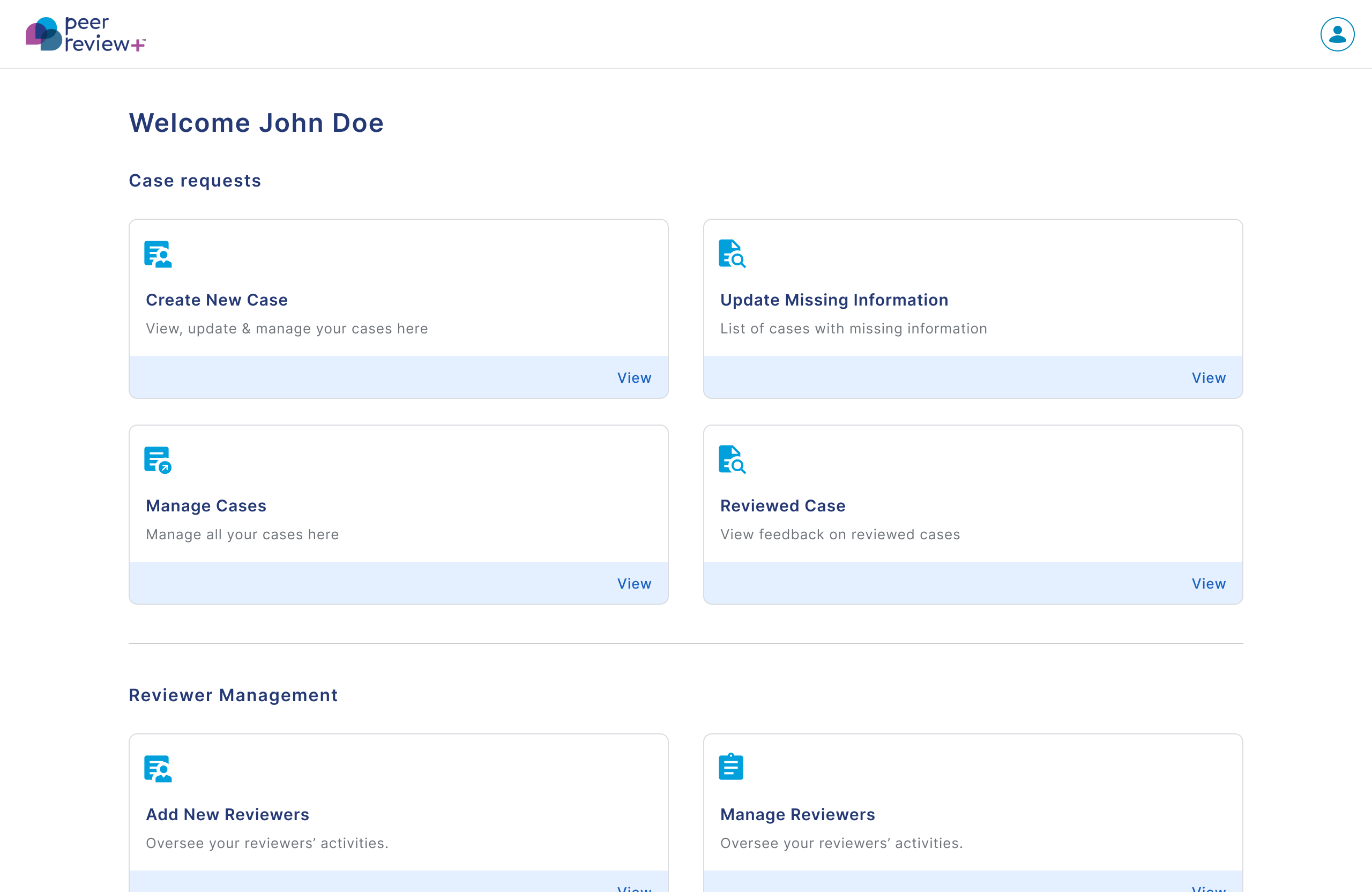
Created distinct dashboards for each user role—Reviewers see pending assignments and performance metrics, Facilities track their submitted cases, and Admins monitor system-wide analytics. All from a single, role-optimized view.
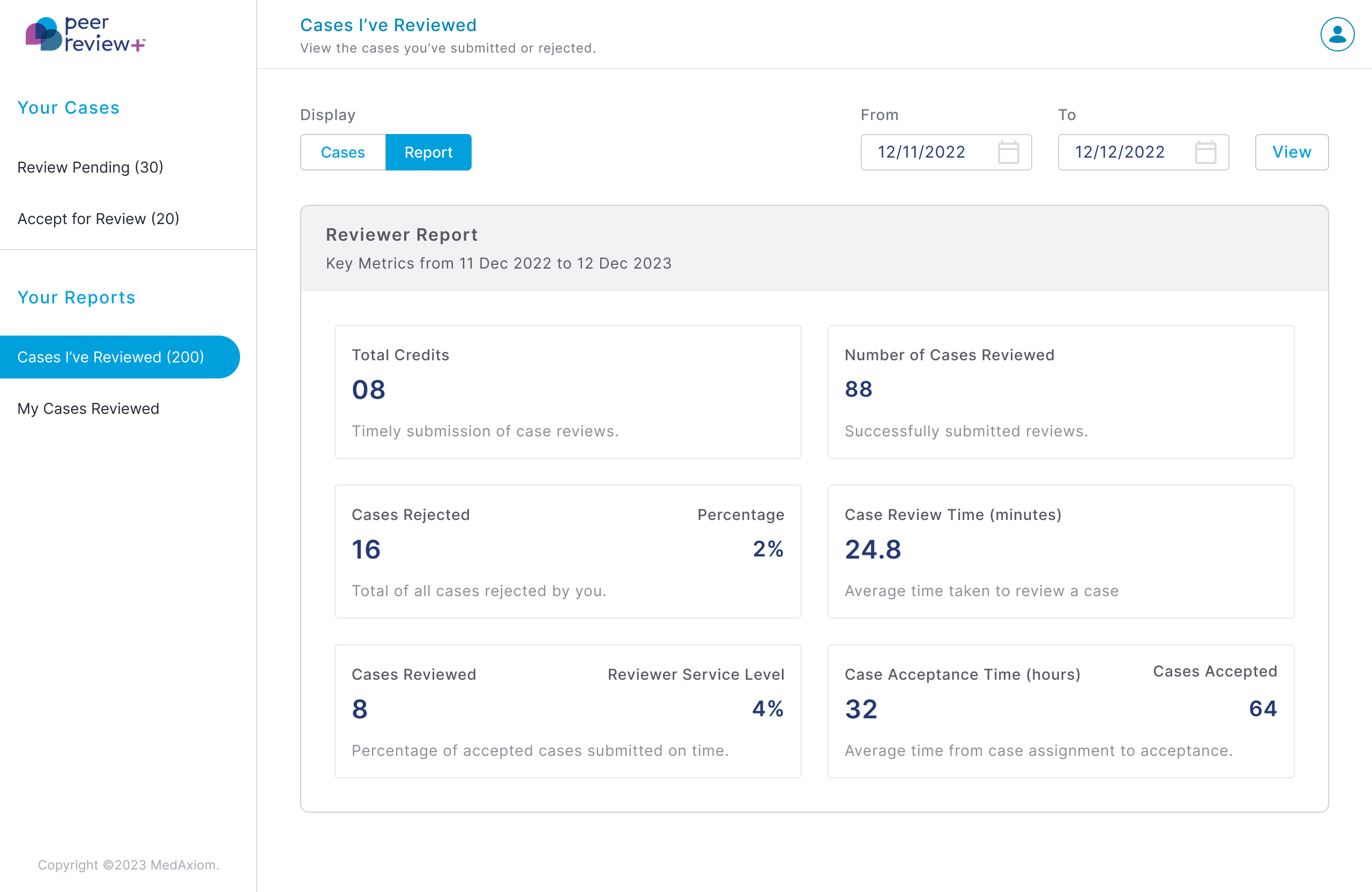
Real-Time Metrics & Reporting
Built comprehensive analytics showing total credits, cases reviewed, rejection rates, review times, and service levels. This transparency enables reviewers to track performance and facilities to optimize their submission quality.
Authentication & Onboarding
Clean, accessible sign-in flow with role-based account creation for reviewers, facilities, and administrators.
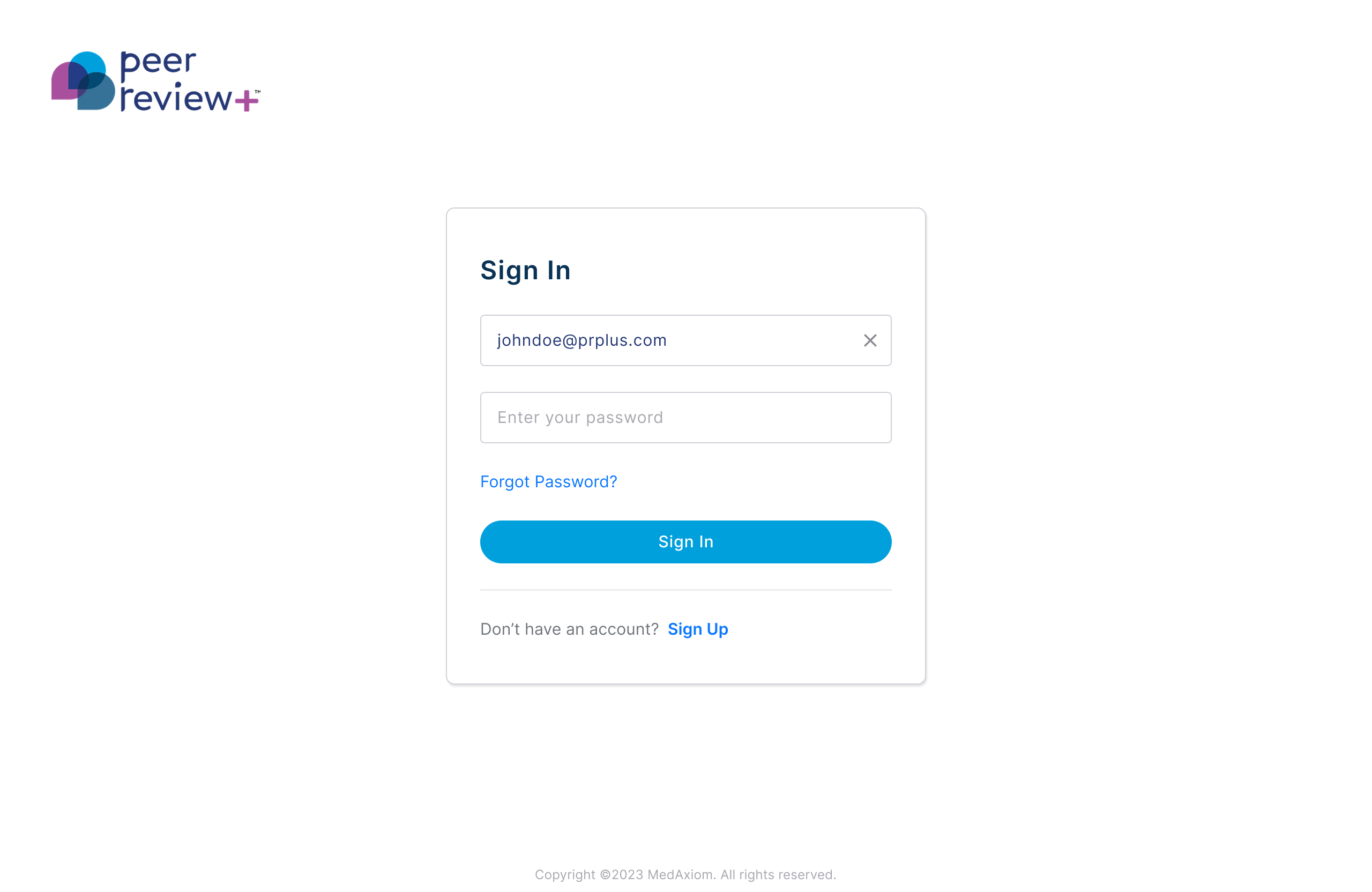
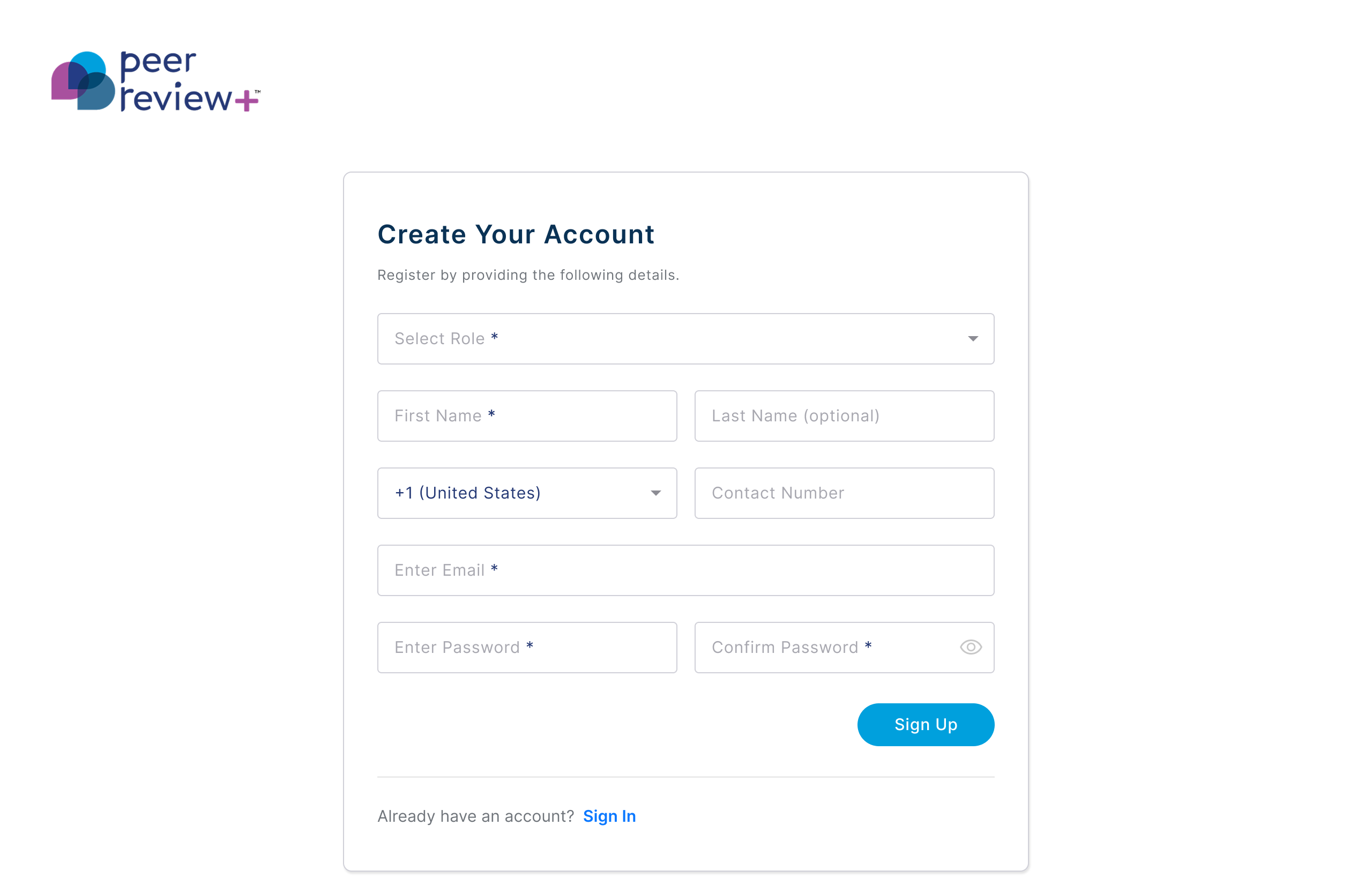
Role-Based Dashboards
Distinct dashboards for each user role showing pending cases, notifications, and key metrics at a glance.
Indigenous Review Interface
The groundbreaking review form featuring progressive disclosure, standardized checklists, and predefined evaluation criteria—ensuring consistent, bias-free case reviews. This interface became the platform's most praised feature.
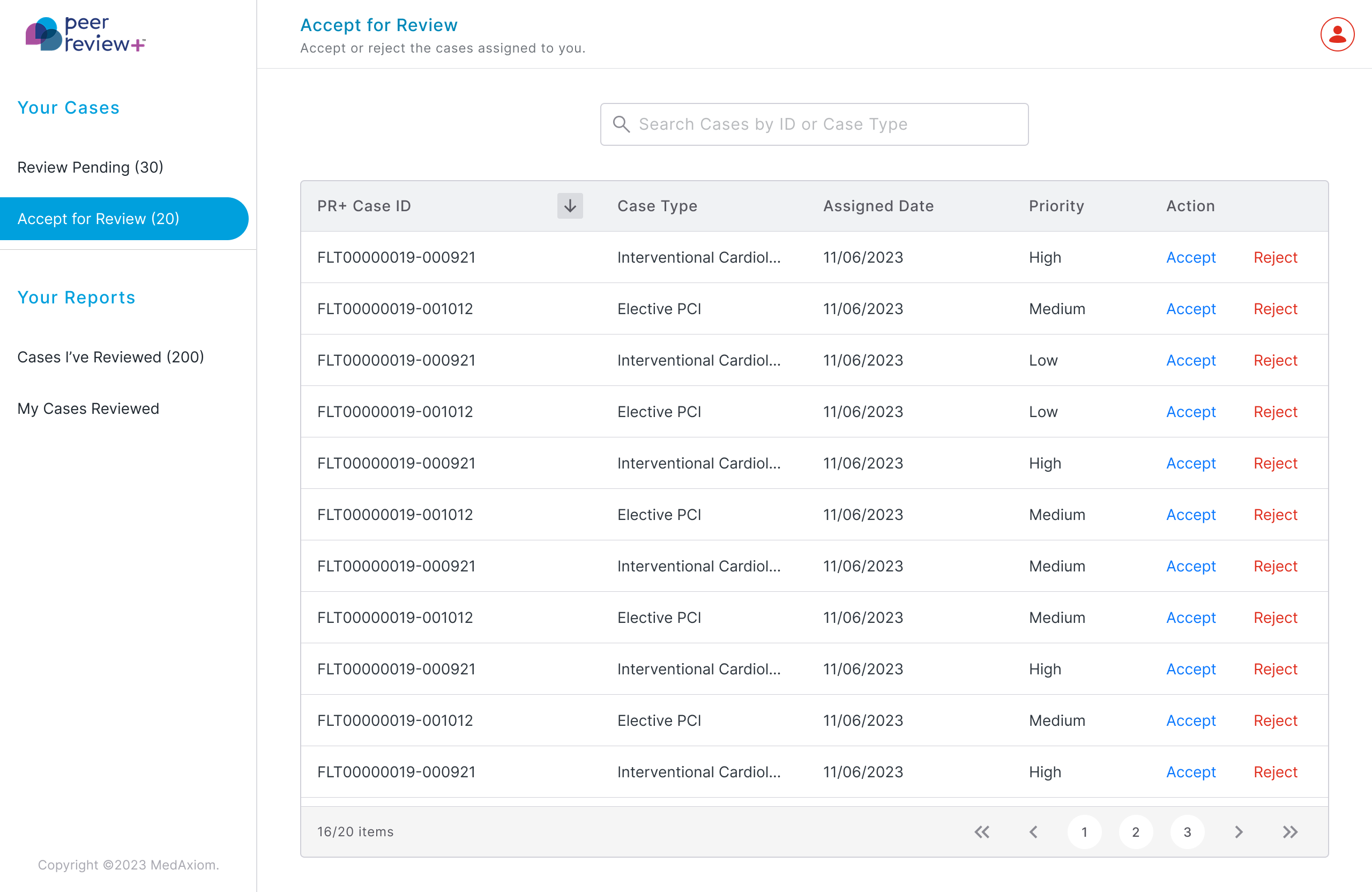
Case Management System
Comprehensive case listing with status indicators, search/filter capabilities, and bulk actions for efficient workflow management.
The Solution
Impact & Results
Positioned Peer Review Plus as MedAxiom's flagship digital-first peer review solution.
Reduced average review time from 14 days to 7 days through streamlined workflows.
Eliminated bias through standardized evaluation criteria with mandatory audit trails.
Consolidated 8+ disconnected systems into one unified platform.
The indigenous review interface became the most praised feature—solving the core UX challenge.
Built transparent metrics showing reviewer performance, case acceptance rates, and turnaround times.
Demoed and accoladed by Shawn Smith (EVP & CIO, MedAxiom) for innovation and usability.
Fully aligned with MedAxiom's quality standards in cardiovascular care.
Created scalable design system supporting future feature expansion.
Reflection & Next Steps
This project reinforced the importance of designing for trust and transparency in healthcare. The indigenous review interface—with its progressive disclosure and bias-reduction features—became the heart of the platform. By building standardization directly into the UI through structured checklists, mandatory reasoning fields, and audit trails, we created a system that reviewers trust and facilities rely on. If I were to revisit this, I'd invest more in collaborative review features to enable real-time consultation between multiple reviewers.